Employers’ Need for Junior Employees Spurs Highly Competitive Summer Intern Market

The Wall Street Journal describes the current recruiting environment as one with unprecedented student leverage. Firms are scrambling to onboard junior employees. According to corporate recruiters, the offers are so plentiful, and many so generous, that they are seeing an increase in students reneging on previously accepted internship offers. Some employers say that they are boosting intern salaries to remain competitive. Others are increasing communications with students who have accepted offers to maintain the relationships. 

Private equity firms are expected to increase intern salaries again this summer. In 2021 the median monthly salary for private equity interns from Columbia, Harvard, and Stanford topped $11,000. This was a particularly notable spike for Columbia students who reported a 2019 median monthly salary of $9,000, and a solid uptick for Harvard and Stanford students who averaged just above $10,000 in 2019. The increases were likely due to pressure from investment banking and consulting firms, where interns made monthly median salaries in 2021 of $12,500 and $13,500, respectively. 

In addition to increasing compensation, private equity recruiters are updating their tactics in response to the competitive market. Ann Anastastia, Vice President of HR for the Americas and Greater China at Advent International, tells the Wall Street Journal, “I have been in private equity for over 15 years and in HR for over 25, and I have never seen anything like this recruiting climate.” She will start the MBA recruiting process much earlier this year, kicking off in the fall as opposed to January. Additionally, the WSJ article notes that private equity firms are promoting themselves more on campus, and engaging directly with students on topics including compensation, work-life balance, diversity, and career development. “In the past, private-equity firms haven’t needed to do that,” said Deirdre O’Donnell, Director of M.B.A. Career Services and Advising at Dartmouth’s Tuck School of Business. 

Law School Admissions Officers Express Preference for LSAT Over GRE Scores

Last November the council of the ABA’s Section of Legal Education and Admissions to the Bar voted in favor of allowing law schools to accept GRE scores in place of the LSAT for admissions decisions. However, a recent Kaplan survey suggests that law school admissions officers still give admissions preference to students who submit LSAT scores. 

Kaplan’s survey respondents included representatives from 25 schools that accept both LSAT and GRE scores from applicants. Of these, 13 reported an admissions advantage for students who submit LSAT scores and the remaining 12 reported that they view the tests equally. None of the schools expressed a preference for the GRE. 

Jeff Thomas, Kaplan’s Executive Director of Legal Programs, summarized the survey results: “What Kaplan’s survey shows is that while there is some definite movement to accept the GRE among law schools, there’s still not full acceptance. Of the schools we spoke with that accept scores from both exams, half say that applicants who submit LSAT scores have the edge over GRE applicants. In fact, no law school we spoke with gives the edge to GRE applicants. Some admissions officers noted the LSAT is created specifically for law school admissions so they have more faith in it, while the GRE, as its name suggests, is much more of a general exam. Schools also treat LSAT students more favorably, giving quicker admissions decisions to LSAT applicants, and scholarship awards exclusively to LSAT applicants. Our research suggests it will be at least several more years before law schools fully warm up to the GRE.”

The survey also provided an opportunity for law school admissions officers to write narrative responses. These direct quotes, while anonymous, offer additional insight into how admissions officers view the two tests. 

Some express a greater faith in the validity of the LSAT’s predictive value for an applicant’s performance in law school. 

“The GRE does not breed confidence in me to put my professional reputation on the line. (I still have bills to pay….) The primary reason why we are including the GRE as an option is because the faculty of this institution didn’t want to ‘fall behind’ the law schools. Well, how do we know where those other law schools are going? How do we know that that direction is the direction that we need or want to take?”

“The advantage to the LSAT is that it is established, accepted universally, and unique to law school. The vast amount of data and history gives it predictive value. Individually, there can be a benefit to someone who can perform better on the GRE, but in terms of competing in a pool, it is still relatively unknown in law schools.” 

“Individuals with an LSAT score will probably need to wait less time to receive an admissions decision. This is because the individuals who evaluate the application for admission have more faith in the validity, reliability and minimization of standardized testing bias that accompany the LSAT.”  

“From my own experience, the GRE is a glorified SAT that doesn’t actually tell us anything about a prospective student’s ability to be an effective law student. The LSAT’s not perfect, but it’s a much better diagnostic tool.” 

Others suggest that taking the LSAT is more indicative of a commitment to law school and the legal profession, as opposed to the GRE which may imply that an applicant is considering law school among other graduate options. 

“For now, we believe that applicants most interested in attending law school will take or have taken the LSAT. Considering the high focus on the cost of law school, graduate debt load, and volatile employment outcomes, we think it is prudent to admit students who have been preparing for law school over time. In addition, there is data that asserts the GRE has the same bias as other standardized tests, so it remains to be seen whether it will result in a significant increase in diverse applicants overall.” 

Finally, another admissions officer pointed out that the LSAT is the preferred test when it comes to determining who will receive scholarship funds.

“We do not offer robust scholarships to GRE only applicants.” 

Physicians Less Likely to Feel Happy Outside of Work

The covid-19 pandemic has caused significant stress to medical caregivers. And it extends beyond their professional lives. Medscape’s 2022 Physician Lifestyle and Happiness report provides insight into physicians’ habits, downtime, work-life balance, and relationships, and includes responses from more than 10,000 U.S. physicians representing almost 30 specialties. 

When asked about their life prior to the pandemic, eight in ten physicians reported that they were very (40 percent) or somewhat (41 percent) happy outside of work. Now, fewer than six in ten say that they are happy outside of work. Just 24 percent say they are very happy and 35 percent are somewhat happy. And, notably, just one-third of respondents feel that they have enough time (always or usually) to spend on their own health and wellness, with men more likely to have time (38 percent) than women (27 percent). Just under half of physicians, 44 percent, “sometimes” have the time to focus on their own wellbeing.

To maintain their happiness and mental health, most physicians say that they spend time with family/friends (68 percent), engage in activities/enjoyable hobbies (66 percent), and exercise (63 percent). Just under half say they focus on getting enough sleep (49 percent) and eating healthy (44 percent). The majority of physicians do say that they exercise regularly—34 percent exercise two to three times a week and 33 percent exercise four or more times a week.  When asked about weight, about one-third say that they are working to maintain their current weight (30 percent), while just over half are looking to lose weight (51 percent). 

Over half of physicians, 55 percent, say that they would take a salary reduction to have a better work-life balance, an increase of eight percentage points from 47 percent a year ago. Female physicians are more likely to express a willingness to take a pay cut for improved work-life balance, with 60 percent saying they would give up salary for balance compared to 53 percent of men. In terms of time away from work, most physicians take between one and four weeks of vacation; 30 percent take one to two weeks and 40 percent take three to four weeks. These numbers are similar to last year’s report. 

Most physicians are married or in a committed relationship (89 percent of men, 75 percent of women). And the majority, 82 percent, describe their marriage as very good or good, which is similar to last year. While the percentages are high across specialties, 91 percent of otolaryngologists and immunologists describe their unions as good or very good, while critical care (76 percent) and plastic surgery (75 percent) fall on the lower side. Forty-three percent of physicians are married to another physician or healthcare worker, though the majority (56 percent) are married to a partner outside of medicine. Among physicians who are parents, 35 percent feel conflicted between work and family demands. Almost half of female physicians, 48 percent, are conflicted or very conflicted, whereas 29 percent of their male counterparts report feeling the same. About 30 percent of both men and women physicians report feeling somewhat conflicted.

Physician wellbeing is critical for preventing burnout, particularly in the aftermath of the pandemic, as burnout levels remain high and directly impact the quality of care provided to patients. The AMA has taken on the topic of physician burnout to spur advocacy, research, and provide tactical resources to improve wellbeing, which prospective and current medical students may wish to review. Medical students should strive to integrate wellbeing practices into their lifestyles as early as possible—healthy dietary and movement habits, outlets for stress, and strong relationships that may help them to withstand the stress of medical school and patient care.

Financial Times Post-MBA Salary Analysis Shows Gender Pay Gap is Declining

A gender pay gap still exists for MBA graduates, but it appears to be shrinking. This is according to a recently released Financial Times analysis. Using data collected through the FT Global MBA Rankings, which collects salary and position information for MBA alumni three years post-graduation, the FT was able to analyze pay equity trends among graduates of ranked MBA programs. The findings indicate that the gender-based pay gap has generally been in decline, with some volatility, since 2007. 

The pay disparity among 2022 MBA alumni three-years post-graduation is eight percent. Men earn a median base salary of $137,000, and women earn $126,422. This compares favorably to the 16 percent pay gap for MBA alumni in 2007, which is the first year the gap started to decline more consistently. Moreover, for the 2022 alumni, the MBA played a role in decreasing the gender pay gap; among this group, the pre-MBA pay gap was ten percent, two percentage points higher than post-degree. Conversely, for 2006 MBA alumni the pre-MBA pay gap totaled 11 percent, and then increased to 16 percent post-MBA.

The Financial Times noted that the decrease in the pay gap can be attributed to women receiving higher base salaries in recent years. In fact, for four of the past seven years—2016, 2017, 2020 and 2021—female graduates have received larger salary increases than males. The analysis also points out that these four years are the only years between 2006 and 2022 that women MBA salaries increased more quickly than did men’s salaries. Generally, however, both male and female salaries are now increasing at similar rates. 

Other key findings include:

  • On average, male MBA alumni have risen more quickly and to more senior positions than females every year since 2006.

  • Male MBA graduates, in both 2007 and 2022, disproportionately pursued careers in higher-paying fields—finance, consulting, and technology—compared to female graduates. The proportion of women in consulting and technology roles, however, has increased between 2007 and 2022.

  • Men and women report the same primary motivations for entering into MBA programs: career and management opportunities, and increased salary. This has remained consistent over time.

  • The proportion of MBA alumni, men and women, who feel that they have achieved their goals is similar, particularly for career opportunities. But men are slightly more likely to say that they achieved an increased salary or secured a management role. 

Law School Applicant Volume Drops After Last Year’s Historic Spike

According to Law School Admission Council (LSAC) data released over the weekend, law school applicant volume for the 2021/2022 admissions cycle has decreased by 9.8 percent from last year and by 9 percent from two years ago. The data compared both applicants and applications as of February 26, 2022 to the same time period for the two preceding application periods. The number of applications submitted also decreased by 8 percent compared to last year; however, they have increased by a staggering 22 percent compared to the same time period two years ago. This suggests that while the number of applications has dropped compared to last year's historic surge (although by a smaller percentage than the decrease in applicants), prospective students continue to submit applications to more schools than they did in previous years. 

As of February 26th, the number of submitted applications to private schools has seen a more significant decrease (-9.3 percent) than for public schools (-5.3 percent) compared to last year. Of the 199 ABA approved law schools, 106 schools reported a decreased application volume compared to last year, 84 reported increased volume, and nine schools report no change. 

The number of applications has also decreased across all ethnicities. The smallest decrease has been among those identifying as Asian (-3 percent) and Hispanic/Latino (-3.1 percent). The largest decreases has been among Native Hawaiian and Other Pacific Islander (-14.8 percent), Canadian Aboriginal/Indigenous (-12.1 percent), and Caucasian/White (-12 percent) applicants. 

The numbers are not yet final, with many schools’ final submission dates occurring in early March, however the LSAC report notes that, at this point last year, 73 percent of the preliminary final applicant count had been received. This suggests that these patterns are likely to hold through the remainder of the application cycle. 

Medical Schools Train Students to Combat Medical Misinformation

Earlier this month, the University of Pennsylvania announced the Penn Medical Communication Research Institute (PMCRI), a collaboration between the Annenberg School for Communication and the Perelman School of Medicine, which will focus on reducing medical misinformation. The Institute will research methods for patients, particularly within vulnerable groups, to access reliable, useful medical information and develop strategies to increase the trust of healthcare providers and the scientific community.

The Institute is reflective of a growing momentum within medical education focused on combating medical and scientific misinformation. Schools are exploring a variety of methods to achieve this.

Brian G. Southwell, PhD, and Jamie L. Wood, PhD, Co-Directors of the Duke Program on Medical Misinformation, and Ann Marie Navar, MD, PhD, wrote in the American Journal of Public Health that, “Encountering patient-held misinformation offers an opportunity for clinicians to learn about patient values, preferences, comprehension, and information diets. Systematically training health care professionals to address patient-held misinformation with empathy and curiosity, acknowledging time and resource constraints, will be a crucial contribution toward future mitigation of medical misinformation.” In turn, Duke’s program, a part of the Duke Center for Community and Population Health Improvement, shares provider guidelines that promote developing “psychologically safe” relationships with patients. In other words, the patients should feel comfortable sharing the information and sources that they use to make medical decisions with their physicians and caregivers without fear of judgment or ridicule. Once physicians and the care team understand where the patient is coming from, they can provide support and guidance to correct misinformation and provide alternative, credible sources.

Other schools are incorporating communication techniques into the medical curriculum so that students can acquire the skills they need to reach broader audiences.

Last Spring at University of Chicago’s Prtizker Medical School, Vineet Arora, MD, MAPP and Sara Serritella, the Director of Communications at the Institute for Translational Medicine, developed and co-taught an elective course for first-year medical students titled, “Improving Scientific Communication and Addressing Misinformation.” Serritella, speaking to the critical nature of the course, cited a 2016 study by the National Science Foundation in which less than one-third of respondents said that they had a “clear understanding” of the meaning of “scientific study.” Medical students, she continued, need awareness of the gap between their understanding and that of the general public so that they can effectively bridge it. The course focused on teaching students the principles of scientific communication, how to identify misinformation, and how to debunk misinformation using infographics. But, more than that, it asked students to consider various audiences and ways to share information that were relatable, understandable, and relevant to those groups. Arora noted that students are well-positioned to play a key role in combating misinformation. “Addressing medical misinformation using evidence-based strategies is one way that medical students can add value and also learn a lifelong skill they will need to improve communication and trust in medical care for their patients,” he said.

At the University of Minnesota, Dr. Kristina Krohn, MD, an assistant professor in the Department of Medicine, saw a social media-specific need that medical students were well-positioned to breach in the early days of the pandemic. In the Spring of 2020, she developed an elective course titled “COVID-19: Outbreaks and the Media” that is still available. The goal of the course is to enable students to leverage social media to relay health information to the public. While the course offered general communications information including defining an objective and creating infographics, it also included basics such as how to create social media accounts, fact-check data, translate scientific literature into layman terms, and relay accurate information in simple, compelling ways… all via social media. Dr. Kohn explains the reasoning behind the course for medical students: “If we share publicly our knowledge in formats that are open and available to the public, we help people make better choices sooner, but we don’t learn how to do that in medical school. I think it’s a huge skill that we’ve overlooked, and social media has made it so that a medical student can do this. We just need to help them do it well and give them the appropriate teaching and tools,” she said.  

“Big Three” Consulting Firms Announce Increase to MBA Starting Salaries

McKinsey, Bain & Co., and Boston Consulting Group have once again earned top billing in Vault’s 2022 “Best Consulting Firms.” Bain & Co. took the top spot with McKinsey scoring just .001 behind in second, and Boston Consulting Group dropped one notch to third. The ranking, which aggregates survey responses from over 17,000 consultants and 130 firms, creates a composite score based on 16 variables including compensation, diversity, work-life balance, job satisfaction, and prestige, among others. 

Bain scored within the top five across all 16 components, including top scores for informal training and relationships with supervisors. McKinsey and Boston Consulting Group received 15 scores within the top five. McKinsey earned top billing for innovation, internal mobility, selectivity, and international opportunities, while Boston Consulting Group received the top rank for firm leadership, overall business outlook, health and wellness, promotion policies, as well as compensation and benefits. 

In even better news for prospective and current MBA students interested in pursuing a career in consulting, the big three also just announced that starting salaries for MBA hires will increase in 2022 by $10,000. This will bring the starting salary up to $175,000 and total compensation packages up by between four and nine percent. In addition, McKinsey recently announced that it will hire its largest summer internship class to date. The firm, which is expanding geographically and functionally, expects to recruit 800 interns, which will include a large number of first-year MBA students.

So, from which schools will they likely recruit? A recent Poets & Quants analysis explored the “feeder schools” for each of these companies, using data from the Wall Street Oasis 2022 Consulting Industry report. For McKinsey, the top feeder schools are University of Toronto, Northwestern, Harvard, University of Michigan, Dartmouth, and Georgia Tech. For Bain—UT Austin, UVA, Harvard, University of Michigan, and Duke. And for Boston Consulting Group—the University of Pennsylvania is by far the largest feeder school, followed by Yale, MIT, and the London School of Economics. 

Law Schools Incorporate Technology and Innovation into Curriculums, which may Improve Access to Justice

Many who need legal representation do not have the means to obtain it. The Legal Services Corporation (LSC), referencing state studies, notes that 80 percent of civil legal needs are unmet. In response, law schools have begun to emerge as key advocates in driving the technological innovations that may help to decrease the access-to-justice gap. 

In 2019, the law school at the University of Pennsylvania received a $125 million gift to launch a Future of the Profession initiative (FPI) with a focus on technological innovation, specifically relating to access to justice improvements. The Initiative’s executive director and chief innovation officer, Jennifer Leonard, describes the FPI as the law school’s “recognition that the legal profession—like many professions—is undergoing a period of enormous change and that a leading law school has an opportunity and obligation to lead through that change.” Similarly, the Pew Charitable Trust is partnering with Stanford Law School and Suffolk Law School “to develop technology reforms that can help courts serve more people, and pair those changes with improvements to associated court processes in order to enhance people’s experiences and interactions with the legal system.” 

These initiatives, in addition to promoting access to justice, also provide students excellent hands-on opportunities to participate in design thinking, research, and technological development. A recent Reuters interview with Joe Regalia, a law professor at the University of Nevada-Las Vegas and Co-Founder of write.law, and Amanda Brown, a legal innovation and technology expert and Founder of Lagniappe Law Lab (LLL) celebrate this momentum. They identify technology as a key means to scale legal services, and law school as the place to combine legal acumen with technological skills.

Regalia says that incorporating technology skill sets into the law school curriculum and instilling “innovation mindsets” will enable students to analyze legal services from a unique vantage, which will give them a head start in working within a fluid environment, scaling a legal approach, and adapting new delivery models for legal services. Skills that are relevant, within the legal profession, but also more generally across the professional workforce, as technology advances continue to change the way business is done. 

Medical Students Offer Recommendations to Improve Medical Schools’ Ability to Promote Student Wellbeing

A group of medical students (Marie Walters, PhD, MPhil, MD1; Taiwo Alonge, MD, MPH2; and Matthew Zeller, DO3) recently published an article in Academic Medicine describing the challenges medical students have navigated during the pandemic. They noted that while some pandemic-era challenges were unprecedented, long-standing issues were also brought to light, and that medical schools can use learnings from this period to implement reforms that promote mental health and wellbeing within the medical student population.

Below are the authors’ recommendations. You can find the full article here

Improving Communications: The pandemic and the “intensified sociopolitical conflicts” affected students’ wellbeing and academic focus, and amplified the need for timely and transparent communications. The authors recommend that administrative leaders partner with student government to provide information, facilitate frequent and consistent town hall meetings, and incorporate the CDC Crisis Emergency Risk Communication (CERC) guidelines into communications. 

Adapting Preclinical Education: Prior to the pandemic, medical schools required students to attend daily, in-person activities that made follow through on any personal commitments difficult. The move to online learning provided flexibility, but it created a lack of differentiation between school and free time. It also created uncertainties around the curriculum’s ability to properly train and assess students in preclinical skills (e.g., physical exams, dissections). The authors recommend that schools maintain flexibility by making recordings of learning activities accessible to all students, provide discounts for proprietary study materials, remove attendance requirements and associated limited access to course materials, and continue to promote virtual networking spaces. 

Enhancing Support Services: An increasing number of medical students reported signs of burnout and some students, from communities more heavily impacted by the pandemic, were unable to return home for funerals or to assist with caretaker responsibilities. Student isolation made it difficult to find support from community, mental health, or wellbeing services. The authors recommend that schools put in place formal mental health checks for students, increase access to mental health support, and, should purely virtual learning need to occur again, offer virtual group clinical opportunities and study sessions.

Adapting Clinical Education: Pre-pandemic, many schools followed “rigid time-based curricula” that lacked flexibility to accommodate students’ outside lives. Students were expected to work while sick, and faced “blackout” days when they were not allowed to request time off. The authors contend that this rigidity is harmful to those who are “already disadvantaged due to financial, health, or social factors,” and recommend that medical schools continue the flexibility that the pandemic necessitated. The authors also say that schools should move to “individualized and flexible competency-based curricula” and/or allow students to make up missed mandatory activities.

Addressing Racialized Trauma: The pandemic provided a clear view of the disparities in healthcare and criminal justice, and created a period of trauma for students, particularly those identifying as Asian-American, Black, or Brown. The authors recommend that schools take a proactive approach to acknowledging current events and injustices in a timely and empathetic manner, noting that this should not just come from diversity offices, but by medical school leaders. 

Empowering Medical Student Activism: During the pandemic medical schools spoke out on structural racism, which amplified activism among medical students. Racially minoritized students took a larger role in this activism. This may have harmed racial minorities compared to non-minorities by taking away time to study or enhance their medical CVs in order to do critical activism work. The authors recommend that medical schools take more tangible action to promote diversity, such as increasing funding for DEI efforts, changing institutional policies to promote internal equity, and creating relationships with expert consultants or community leaders. The authors say that schools should also ensure, to the extent possible, that students engaging in activism are not harmed by spending time on these efforts. Additionally, schools should create strategic plans to improve on DEI measures with clear short-term, incremental, and long-term goals.

Trends in Business: MBA Programs Prepare Students for Leadership Roles in Technology

Technology is changing. And so are the demands of the leaders and professionals in the field. Recently, zdnet, a technology-focused news and research site, published an article describing the changing demands of leaders and employees in technology. No longer, the article states, is technical proficiency enough. Technology can no longer exist as a stand-alone function, but must be thoroughly integrated into the business. And tech practitioners must be able to take a broader perspective that includes a thorough understanding of other business functions and how technology fits in amongst them to drive the organization’s mission. “It's important to start to learn about finance, business processes, and other strategies that make up how your product or solution comes full-cycle for your organization," said Nag Vaidyanathan, Chief Technology Officer at Duck Creek Technologies. "How you collaborate with other functions is critical to the results you can achieve." 

Haluk Saker, a Senior Vice President at Booz Allen Hamilton, notes that the speed of technological change is such that professionals and managers need, "…problem-solving skills versus language-specific skills. IT professionals should focus on learning, disrupting the status quo, and continuing to gain skills across different domains that interest them. This type of professional, with an innate curiosity and an aptitude to grow as a leader and influencer, is the one that will be able to face tomorrow's toughest challenges head-on," he said.

MBA programs are at the forefront of understanding transformation in the technology industry and a number of leading schools (noted below) now offer shorter, and more focused Tech MBA programs. They include core requirements in technology, in addition to typical MBA requirements in general management and leadership. 

  • Johnson Cornell Tech MBA: This is a one-year MBA conferred by the Johnson Graduate School of Management. Graduates will have a full understanding of the startup and tech ecosystems, and will be prepared to manage product teams, and lead tech companies.

  • NYU Stern Andre Koo Tech MBA: This is a one-year STEM-designated MBA program conferred by NYU Stern. Graduates will be qualified to join startups and mature tech companies at the forefront of innovation and technology, and will be prepared to accelerate their careers in technology or start their own businesses. 

  • Northwestern Kellogg MBAi: This is a joint degree between Kellogg and the McCormick School of Engineering. Graduates will be prepared for careers in tech operations, analytics, and innovation leadership. 

  • Foster School of Business Technology Management MBA: This is an 18-month work-compatible MBA conferred by the Foster School of Business, and is designed to prepare graduates to accelerate or re-direct their careers, or to start their own businesses.

  • IE Business School Tech MBA: This is a one-year MBA conferred by the IE Business School. It is designed for students who want to develop their career in the technology sector or in tech-centric job roles, and who seek to become fluent in the language of business and technology. 

In addition to the Tech MBA program options, many schools are integrating technology tracks into their full-time, two-year MBA programs. Fordham University’s Gabelli School of Business has created a secondary concentration in blockchain, and Georgetown’s McDonough School of Business now offers a handful of classes in fintech and crypto. And this trend is just getting started. Recently, several elite schools have announced incoming investments earmarked for building out technology initiatives. The USC Marshall School of Business received a $5 million gift to establish the Digital Assets Initiative, which will establish new curriculums and research opportunities in cryptocurrency, NFTs, and blockchain. Similarly, Harvard Business School is establishing the “D3” Institute to promote collaboration and research in digital and technology, data science, artificial intelligence and machine learning, and design thinking. And University of Pennsylvania’s Wharton School recently received an anonymous $5 million donation (in bitcoin) that will support the Stevens Center for Innovation in Finance, which focuses on fintech research and education.

Young Lawyers Express Desire for Employers to Provide Clear Career Progression, Mentorship Opportunities, and Better Work-Life Balance

A global survey of young lawyers sponsored by the International Bar Association gives an eye-opening look at workplace satisfaction in the legal profession. The survey, which includes responses from over 3,000 professionals, aged 40 and under, found that in the next five years, 54 percent are likely to move to a new, comparable workplace, 33 percent are likely to move to a new legal profession (e.g., from a firm to in-house), and 20 percent are likely to leave law altogether. Most who say that they are planning to leave their current roles point to salary as the impetus (49 percent). But many also named progression opportunities and work-life balance (38 and 36 percent, respectively). Among the 20 percent who plan to leave the legal profession, 41 percent cite workload and 36 percent cite work-life balance. 

Just ten percent of respondents felt that they had not experienced any barriers to progression in their careers. Among the young lawyers who did express concerns about career progression, 37 percent said they feel their efforts to balance commitments hinders their career opportunities. A similar number, 36 percent, call out a lack of mentorship. Just under one-third (mostly in-house lawyers) feel that there is a dearth of promotion opportunities. The report also found that women report barriers to career progression at a higher rate than men; 40 percent of women report difficulty balancing commitments (34 percent for men), 39 percent of women cite a lack of mentorship and career guidance (32 percent for men), and most differentiating, 20 percent of women cite direct discrimination compared to just nine percent of men.

When asked about concerns for their future, most young lawyers cited work-life balance (62 percent); this held particularly true among the youngest lawyers, as well as the female lawyers surveyed. Following in a distant second, 43 percent named opportunities for growth and 36 percent named oversaturation of the labor market with new law graduates and failure of the legal profession to address toxic workplaces.

The survey responses, although global, likely also hold true within the U.S., which has a reputation for hard-charging corporate environments. However, James Goodnow, CEO and Managing Partner at Fennemore Craig, said in Above the Law that these workplace-related obstacles—lack of mentorship and promotion opportunities—are “...curable, but they require real thought and effort to make them effective.” He notes that putting together quick and simple solutions that check the box should not be the takeaway for legal industry leaders. For example, rather than quickly assigning young lawyers to mentors and hoping for success, firms should take the more difficult path of cultivating close working relationships between young and experienced lawyers. He calls out the power of “proximity and time” to create “real affinity and friendship.” Similarly, he notes that promotion cycles should not just be known, consistent and achievable, but that young lawyers should be given opportunities to make meaningful contributions to the firm. He recommends providing opportunities for young lawyers to become subject matter experts. “As with so many problems in law firms, the cure really comes down to cultivating a strong firm culture. When our teams feel cared about, when they lift one another up and empower each other, all the seemingly impossible problems tend to become less significant,” he said. 

University of Pennsylvania’s Wharton Named Top MBA by the Financial Times

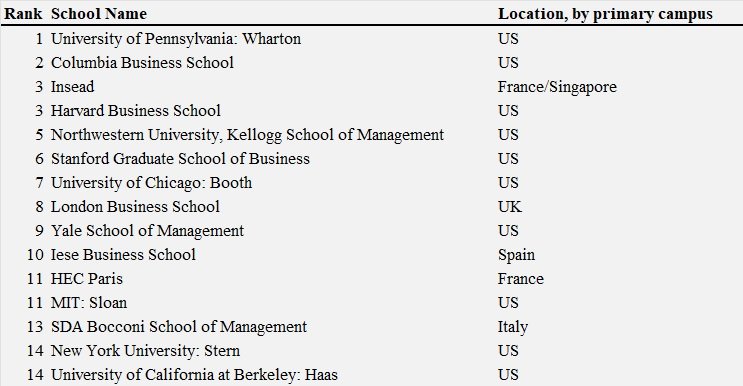
The Financial Times just released its 2022 MBA rankings and University of Pennsylvania’s Wharton school is at the top. This marks the school’s eleventh return to the first rank, after last receiving the honor in 2011. Columbia placed second, which is its highest-ever showing in the Financial Times ranking. U.S.-based MBA programs had a strong showing overall, taking ten out of the top fifteen spots.

National Health Service Corps Demands Additional Flexibility for Participants due to Center Closures in Pandemic-era

The National Health Service Corps is a federal program with a mandate to improve access to healthcare in underserved areas. The program provides incentives to physicians—and other medical workers including dentists, nurse practitioners, and physician assistants—to work in designated Health Professional Shortage Areas (HPSA) in exchange for scholarship or loan repayment funds.

There are three programs specific to physicians: 

  1. Federal Scholarship Program: Full-time students who are U.S. citizens and complete a primary care residency are eligible to receive a scholarship for tuition and school-related expenses as well as a (taxable) stipend. For each year of scholarship, students are expected to serve a year working as a physician at an HPSA; there is a minimum of two-years full time service (or four years part-time) with a maximum of four years of scholarship. 

  2. Federal Loan Repayment Program: If employed by NHSC-approved sites, primary care physicians can apply to receive loan repayment, including loans for tuition and living expenses for both their medical school and undergraduate education. Within this program, there are three tracks: general, substance-abuse workforce, and rural community. 

  3. State Loan Repayment Programs: A state-tailored version of the program, with modifications on program eligibility and service requirements based on specific state-wide needs. 

The programs are competitive, with about ten percent of applicants receiving federal scholarships and entry into the loan repayment programs. However, medical students should carefully consider the contractual agreements when committing to the program. The Student Doctor Network describes the pros and cons of the program. The pros, of course, come in the form of loan repayment and scholarship, which for medical school, can provide a significant sum. The cons, however, are in the restrictive nature of the program. For physicians, scholarship recipients are locked into primary care and fellowships within primary care, which can be limited. Participants also need to be open to relocation throughout the United States, as the NHSC has the final approval on placement. This can be particularly onerous for medical providers with family responsibilities or ties to a specific geographic location. Finally, there are significant financial consequences for breaking the contract.  

The pandemic magnified the restrictive nature of the program and need for participant adaptability. Last week, the Wall Street Journal ran an article profiling several program participants who experienced center closures and resulting job loss. Upon losing their positions, they had 90 days to find a new job; in the cases profiled, the participants needed to relocate in order to find a qualifying placement and when they were unable to do so, they described significant consequences. They had to repay the money they’d received. And those who violated their contracts were charged heavy monetary fines. In one case, a dental hygienist owed a fee that was more than five times the original loan repayment. In all of the cases, the participants described obstacles that made it difficult, if not impossible, to find a qualifying role to continue their service, as well as the financial devastation that would come from repaying the loans with the penalty. 

So, is it worth it? The Student Doctor Network says, “It depends. Once you’re a physician there will be many opportunities to pay off your debt. You can choose a better paid position or find one that offers loan repayment. How committed are you to public service? To primary care? How expensive is your medical school? Like many programs with financial incentives, it is important to believe in the mission before you sign the dotted line.”

Harvard Business School Sets a New Agenda Focused on Positioning Business to Solve Society’s Biggest Challenges

Srikant Datar took over the leadership of Harvard Business School in January 2021, mid-way through the academic year, and in the midst of the covid pandemic. Rather than derailing his vision, the pandemic, with its emphasis on technology and hybrid learning formats, has actually expedited it. “COVID is the passage to the school’s future. Without any doubt, it has been an extremely exciting and rewarding year,” he said.  

Datar spent a considerable amount of time seeking input from the HBS community when building his agenda. He spoke with every faculty member and facilitated individual and small group meetings with alumni, students, staff, and others to understand their goals and perspectives. Datar then defined three “aspirations” for the school, “...stretching HBS and its learners beyond notions of merely personal success toward becoming, collectively and individually, driving forces in redefining the role of business in society around the world—addressing inequality, exclusion, climate change, and other intractable problems. Second, directing HBS’s research to action, ensuring that the leaders it trains or influences change practices and engage human differences to enhance the constructive role of capitalism. And, finally, the school must transform learning, extend its reach, and work with its students throughout their careers.”

Datar also named the “engines” that would make these aspirations possible: recruiting a diverse array of talent and enabling their success, undergoing a digital transformation for education delivery and the HBS “research infrastructure”, and “expanding and deepening ties” to the greater University, particularly into the humanities. 

To activate the aspirations, Datar announced that Harvard Business School will be creating two institutes, one focused on business and society, and the other on digital and technology. These institutes will provide a structure that facilitates faculty interactions, student engagement with research efforts and new technologies, and space for alumni and businesses to access, train and collaborate using the latest research.  

The Institute for the Study of Business in Global Society, which will be led by Debora L. Spar, will house the following activities:

  • HBS’s academic partnership with OneTen, an organization dedicated to advocating for black individuals who do not have an undergraduate degree, but wish to use skills and knowledge to obtain “family-sustaining careers”

  • Climate change research and the promotion of carbon neutral goals by considering alternative accounting metrics

  • Economic development within mid-American cities harmed most by de-industrialization; researching promising engines to spur business and economic growth

  • Social Enterprise research and the development of new models to enhance impact

The second institute, currently labeled “D3,” will be led by Karim R. Lakhani and focus on digital and technology, data science, artificial intelligence and machine learning, and design thinking. Clustering the topics together will optimize research efforts and maximize the impact for HBS and business overall. 

While the HBS priorities are centered on two key pillars, business and society, and data and technology, Datar says he considers these components two parts of a whole. “When I think about the challenges we’re talking about,” Datar said, alluding to both the school and society writ large, “every time we have talked about technology on one side of the coin, on the other side is humanities and people. Any time you let those two get out of synch, the opportunity for division arises, and with it, economic harm. Leadership at the core means always thinking about impact on people, and on what you are trying to achieve through an organization.” 

Read the full interview between Srikant Datar and the Harvard Magazine here.  

Legal Community Proposes Law Schools Incorporate Stress Management into their Curriculums

The first year of law school is a time of significant stress. Last week, Law.com reported on a post made in the r/lawschool sub-reddit by a user who described their experience as a first semester law student. The poster noted that because of stress, they suffered from unintentional weight loss, vision changes, headaches, acid reflux, and newly acquired tremors after the first semester. The thread quickly garnered many replies. While some expressed sympathy and concern, over 70 comments by other law school students described similar stress-induced physical ailments including weight gain, low energy, poor nutrition, constant fatigue, eczema, and anxiety.

Charles N. Todd, Dean of Students for the University of Chicago Law School, speaking to Law.com about the thread, described the first year of law school as “one of the steepest learning curves.” However, he continued on to say that, “I tell students all the time that it’s not going to get any easier. The demands of your time will not go away once you leave school. In fact, you’re going to have more things with family responsibilities, life, and work, so we really want them to learn how to develop healthy habits in law school so those will sustain them throughout their career.” 

The initial reddit poster followed up to share their decision to visit a doctor and noted their intention to create healthier habits the next semester. Dean Todd recommended taking small breaks throughout the day to incorporate healthy activity. “It doesn’t have to be this big interruption in your day, it could be a 10-minute break to color or to have some healthy food or do some stretches because you’ve been sitting a long time,” he said. 

Others in the legal community suggest that law schools should take more responsibility for student health. Janet Thomas Jackson, a law professor at Washburn University School of Law, calls for law schools to take an active role in promoting wellbeing and mental health within their student populations. In an article written for Bloomberg Law, she noted how frequently law students and legal professionals are impacted by depression. According to the Dave Nee Foundation, “Depression among law students is 8-9% prior to matriculation, 27% after one semester, 34% after 2 semesters, and 40% after 3 years.” Further, just as Dean Todd noted, the foundation’s data shows that stress and its associated effects do not necessarily recede after law school. Rather, lawyers are the most frequently depressed professional group within the U.S., and lawyers suffer depression at a rate 3.6 times that of non-lawyers. 

Jackson suggests that the legal community not accept this as inevitable; she proposes that law schools integrate discussions of physical and mental health throughout student’s tenure, starting at orientation. And prior to starting classes, law schools should educate students and their families on the “expectations and predictable stressors” of law school, resources for seeking help, and insight into healthy habits and effective stress management. She notes that students of color should receive additional support, including safe spaces and communities where they can share their experiences and feel a sense of belonging. Finally, Jackson recommends that self-care practices and physical and mental health be integrated into the curriculum. “In other words, law schools should play a primary role in normalizing discussions and actions around the mental and physical care of its students,” she said.  

Related Blogs: Law School Students Still Not Receiving Adequate Mental Health Support

Medical Community Lauds Addition of Public Health Priorities to Methodology of U.S. News’ Medical Rankings

In response to criticism from the medical community, the U.S. News & World Report updated the methodology behind their 2022 Best Medical Schools in Primary Care ranking. A recent JAMA Viewpoint article entitled, “Increasing Transparency for Medical School Primary Care Rankings—Moving From a Beauty Contest to a Talent Show“ by Robert L. Phillips Jr, MD, MSPH, Andrew W. Bazemore, MD, MPH, and John M. Westfall, MD, MPH described the updates: “The rankings were modified in 2021 such that 30% of the score is now based on graduates practicing primary care after their residency training, rather than those entering primary care training. Initial residency comprises 10% of the score, which still overestimates primary care, but this measure has been reduced from its previous weighting of 30%. The remaining score (60%) is still largely based on reputation, which is assessed by (1) surveys of medical school deans, internal medicine chairs, or admissions directors (15%); (2) survey of primary care residency directors (15%); (3) student selectivity (median Medical College Admission Test score, 9.75%; median undergraduate grade point average, 4.5%; acceptance rate, 0.75%); and (4) faculty to student ratio (15%).” The authors call the updates to the methodology “a step in the right direction,” although they continue to express that the reputation portion of the score is subjective and self-perpetuating

More important than the methodology update, the authors say, is U.S. News's addition of four new data-based rankings. The newly added rankings include: 1) graduates practicing primary care; 2) most diverse medical schools; 3) graduates practicing in medically underserved areas; and 4) graduates practicing patient care in rural areas. These rankings were created with the Robert Graham Center, a division of the American Academy of Family Physicians, and were defined to measure medical schools’ performance on key health care issues. The graduate-based rankings use data collected five-to-seven years after a physician’s training, making them more reflective of student outcomes and better able to showcase the public health contributions of schools that are hidden within the broader rankings. For example, the authors point to the disparity seen in the Harvard Medical School rankings; the medical school, ranked 8th for Best Primary Care, ranks 141st for graduates practicing in primary care fields. Conversely, the Pacific Northwest University of Health Sciences, which is unranked in the primary care ranking, ranks second for graduates practicing in primary care fields, second for graduates working in medically underserved communities, and seventeenth for graduates working in rural areas.  

One of the article’s authors, Dr. Phillips, speaking with the AMA, notes that students should understand the large role that reputation plays in the mainstream rankings and should proceed with caution when using the rankings to inform their medical school options. “Students should be careful in using medical school rankings to inform their choices as many rankings are opinion-driven.” Rather, he recommended that students consider the more objective, data-driven rankings based on where and what graduates end up practicing. “We also hope that the new ranking heralds continued improvement of the information that help students make career decisions. 

On a wider-scale, the authors call out the importance of the four new rankings in providing transparency into how schools contribute to key social outcomes, for policy decisions by both states and medical schools themselves. “These outcome measures should help medical schools to assess fidelity to their missions and alter admissions, curriculum, and training settings if different outcomes are desired.”

Biden Administration Remains Under Pressure to Move Forward with Student Debt Cancellation

On May 1, 2022, which is just three months away, federal student loan payments will resume. This comes after a two-year period during which borrowers could choose whether or not they would make payments. As the date nears, the Biden administration is under pressure to make good on campaign promises to reduce student debt for millions of Americans with federal loans. Last week, 85 Democratic members of Congress sent the President a letter urging him to, “...direct the Department of Education to publicly release the memo outlining your legal authority to broadly cancel federal student loan debt and immediately cancel up to $50,000 of student loan debt per borrower.”

But it is still unclear how President Biden will move forward. During his campaign, he promised to forgive up to $10,000 per student loan borrower, but he has since expressed hesitancy to extend loan forgiveness to those attending elite schools or who obtained professional graduate degrees, and have strong repayment prospects. In a press conference last month, President Biden declined to comment on a question about student loan forgiveness. 

An article in the Wall Street Journal speculates that the Biden Administration may opt to forego blanket debt forgiveness for an alternative path, “...by starting a regulatory process, complete with input from stakeholders, to set up a debt-forgiveness program that targets people most in need.” This path may allow the administration to avoid a potential Supreme Court battle that an Executive Action may spur.

In the meantime, the administration has moved forward with more targeted loan-relief initiatives, such as a revamp of the long-standing Public Service Loan Forgiveness (PSLF) program. This would allow those who have worked for a public or nonprofit organization, and also made monthly payments for a ten-year period (120 payments) to have their loans forgiven. A revamp is exciting for current business, medical, and law students who wish to go into public service, and necessary. The original program, which dates back to 2007, burdened participants with bureaucratic hurdles, and only provided benefits to a small percentage, about 16,000 out of 1.3 million. 

A Compelling Diversity Statement will Strengthen Your Candidacy for Law School

Let’s start with some context around the importance of diversity within the legal profession. The ABA recently published a piece on why diversity matters in the law, defining diversity as “... more than just racial or ethnic diversity. The concept of diversity encompasses all persons of every background, gender, race, sexual orientation, age, and/or disability.” The article goes on to provide the perspectives of leaders within the legal industry on the importance of diversity, which we have excerpted below. 

Find the full text here

  • Public confidence. “[R]acial and ethnic diversity in the legal profession is necessary to demonstrate that our laws are being made and administered for the benefit of all persons. Because the public’s perception of the legal profession often informs impressions of the legal system, a diverse bar and bench create greater trust in the rule of law.” (ABA)

  • Quality of legal decisions. “A diverse legal profession is more just, productive, and intelligent because diversity, both cognitive and cultural, often leads to better questions, analyses, solutions, and processes.” (ABA)

  • Competitive advantage. “A demonstrated commitment to diversity and inclusion can be a key aspect of a law firm’s competitive advantage when it comes to recruiting and retaining talent and pitching certain clients. Clients receive the highest quality service when their legal teams are drawn from professionals mirroring the diversity of the marketplace.” (Tiffani Lee, Partner, Holland & Knight, LLP)

  • Path to leadership. “In order to cultivate a set of leaders with legitimacy in the eyes of the citizenry, it is necessary that the path to leadership be visibly open to talented and qualified individuals of every race and ethnicity,” (Justice O’Connor, Ret., noting that the nation’s leaders often come through the legal system)

  • Thought leadership. “Their unique backgrounds help to ensure that a 360-degree approach is used to analyze each issue. Having a diverse legal team helps to eliminate the possibility of bias affecting your final decision.” (Robin Wofford of Wilson Turner Kosmo LLP, who also serves as chair of the National Association of Minority & Women Owned Law Firms)

For these reasons, and many more, it is critical that law schools and the legal profession are representative of the larger population. So, what does that mean for your application to law school? It means that you will want to craft a diversity statement that will show the reader your ability to connect, grow, thrive, and meaningfully collaborate in diverse environments and/or explore how you will contribute to the diversity of the incoming class. Of course, you want the piece to strengthen your candidacy, so if it feels forced or inauthentic, or if the prompt seems limited to those who identify as a racial or other minority and does not apply to you, it is best to leave it blank.  

In brainstorming possible experiences or anecdotes to include, ask yourself the following questions: 

  • What traits or characteristics make you unique? 

  • In what way might you be able to offer your law school cohort an unconventional perspective? 

  • What are some collaborative situations in which you have experienced discomfort? Did you work with an international group on a project in an academic or professional setting, or have an internship in a foreign country where no one else in the office spoke English?

  • What are some experiences that prompted an evolution in your perspective? Did you participate in a volunteer project serving an underrepresented clientele or provide services to those with disabilities or unique obstacles?

  • How are your experiences likely different from those of other candidates? Did you take an unusual career path prior to applying to law school? 

Once you have a thorough brainstorm, we can help you to further develop a story that communicates to admissions committees your ability to contribute to a dynamic and diverse learning environment and grow from others’ perspectives. 

Pre-Med Students Face Stress as Clinical Experiences Become Harder to Find

The stress of applying to medical school has always been significant. A Kaplan survey of 400 pre-med students, taken in early 2020, found that 37 percent “seriously considered” changing their plans for a medical career due to stress. Just over a quarter (26 percent) said that they experience stress “pretty much always,” and another 45 percent said “frequently.” Over half (57 percent) said that self-medicating with alcohol or drugs is common for them as they work to grapple with the demands. 

And experts say that the pandemic is only increasing these stressors. “I don’t think we can underestimate how COVID-19 is impacting the mental health of the entire population, never mind students who are preparing to apply to medical school,” said Carol A. Terregino, MD, and the Senior Associate Dean for Education and Academic Affairs at Rutgers Robert Wood Johnson Medical School. “There are fewer opportunities to engage in the humanistic activities, to shadow and volunteer to demonstrate one’s passion for medicine because of the pandemic and more time to focus on metrics and study for the MCAT (Medical College Admission Test). And that isn’t necessarily a good thing.”

This sentiment was echoed in a Yale News interview with pre-medical students. Students spoke of their experiences with the closures and re-openings of “wet labs,” with seniors claiming to be overlooked in favor of younger students who could commit to multiple years of research. Students also reported difficulties finding opportunities to shadow doctors, or volunteer at local hospitals. “If you’re trying to volunteer at the New Haven Hospital or the HAVEN Free Clinic, it’s hard to do so because of COVID restrictions,” Courtney Li, pre-med class of 2024, explained. “There was definitely a time period where they weren’t accepting volunteers.”

In response, Dr. Terregino provides a calming perspective to applicants. “Medicine is stressful. Getting ready for medical school is stressful. But I’d offer that one can temper their stress knowing it’s more than just grades and MCAT scores that admissions committees are looking for, and there is a full understanding of the limitations on experiences placed by the pandemic. Personal development also counts.”

So, what should pre-medical students do? 

As limitations exist, so do opportunities. Showcase your adaptability by making the best of challenging times. We recommend considering the following experiences if you are not able to find in-person shadowing or clinical roles.

  • Contact current or retired physicians in your network, or access your university’s alumni network, to interview them and learn more about their specialties, experience, and advice for aspiring physicians.

  • Leverage your university network, including current and retired professors and alumni, to look for in-person or virtual research opportunities.

  • Pursue virtual shadowing opportunities.

  • Engage in volunteer work to demonstrate your commitment to serving others and working with diverse populations.

  • Consider study abroad and summer programs that provide shadowing or clinical experiences.

Continuing to pursue learning and development opportunities, even in less-than-ideal circumstances, will still prompt meaningful evolutions in your perspective and will help convince the admission committee of your commitment to the study of medicine.  

Harvard Round Two Action Expected Wednesday

Late last week, the HBS Director of Admissions announced that on Wednesday, February 2nd at 12:00pm EST, all Round Two applicants or those Round One applicants who received “Further Consideration” will receive an update via the Application Status page. At this time applicants will either receive an invitation to interview or will be released from the process.

Related blogs:

Top 10 Tips for the MBA Behavioral Interview 

MBA Interviews: When the Interview Requires More than an Interview